

01 / OVERVIEW
GPT-6 Astra has arrived
In OpenAI’s official launch film, a user relying on voice alone had Astra sketch a rocket, model it in Blender, build a small interactive game around it, and finally 3D-print the rocket itself. Yes — the model billed as an epic leap in reasoning, coding and taste chose to flex its muscles first on building a 3D interactive scene and a physical object.
AGI needs 3D. Fei-Fei Li has called 3D the universal interface between humans and machines. In the science-fiction novel Project Hail Mary, had the protagonist not met an alien engineer who could shape xenonite on the fly — a walking 3D printer, essentially — the two would likely have failed to communicate or collaborate, and missed their chance to save each other’s home worlds.
3D does not just save civilizations; 3D is itself a carrier of civilization. Long before humans learned to write or paint, they were already shaping stone, shell and bone into artifacts that carried information and beauty. Tens of thousands of years later, as AI models leap forward, a renaissance that belongs to 3D is spreading across the global internet.
02 / OVERVIEW
Creators are already building worlds with Tripo + Astra
On social platforms at home and abroad, plenty of creators are already combining Tripo with GPT-6 Astra to turn wild ideas into interactive work.
Bringing the scenes of Alice’s Adventures in Wonderland to life had long been a dream of the creator duo @海辛和阿文. Nano Banana produced the reference images, Tripo P2.0 modeled them quickly, and Codex assembled the scene, effects and interactions. With that workflow they turned the chapter “Advice from a Caterpillar” into a polished game; the making-of video reached Bilibili’s trending list, and the tutorial has passed 100,000 views on X.
@luccacerf, a user with no modeling or game-development background, built a World of Warcraft fan game with an Astra – Tripo P2.0 – Blender – Unity workflow: three prompts and ninety minutes of work.
3D creator Stefan (@Stefan_3D_AI) first tried having Astra generate 3D models directly. When the quality fell short, he switched to a more mature pipeline: model with Tripo H3.1 plus the Blender MCP, then hand off to Astra for assembly and animation. The result is a set of finely textured, highly finished 3D pieces.
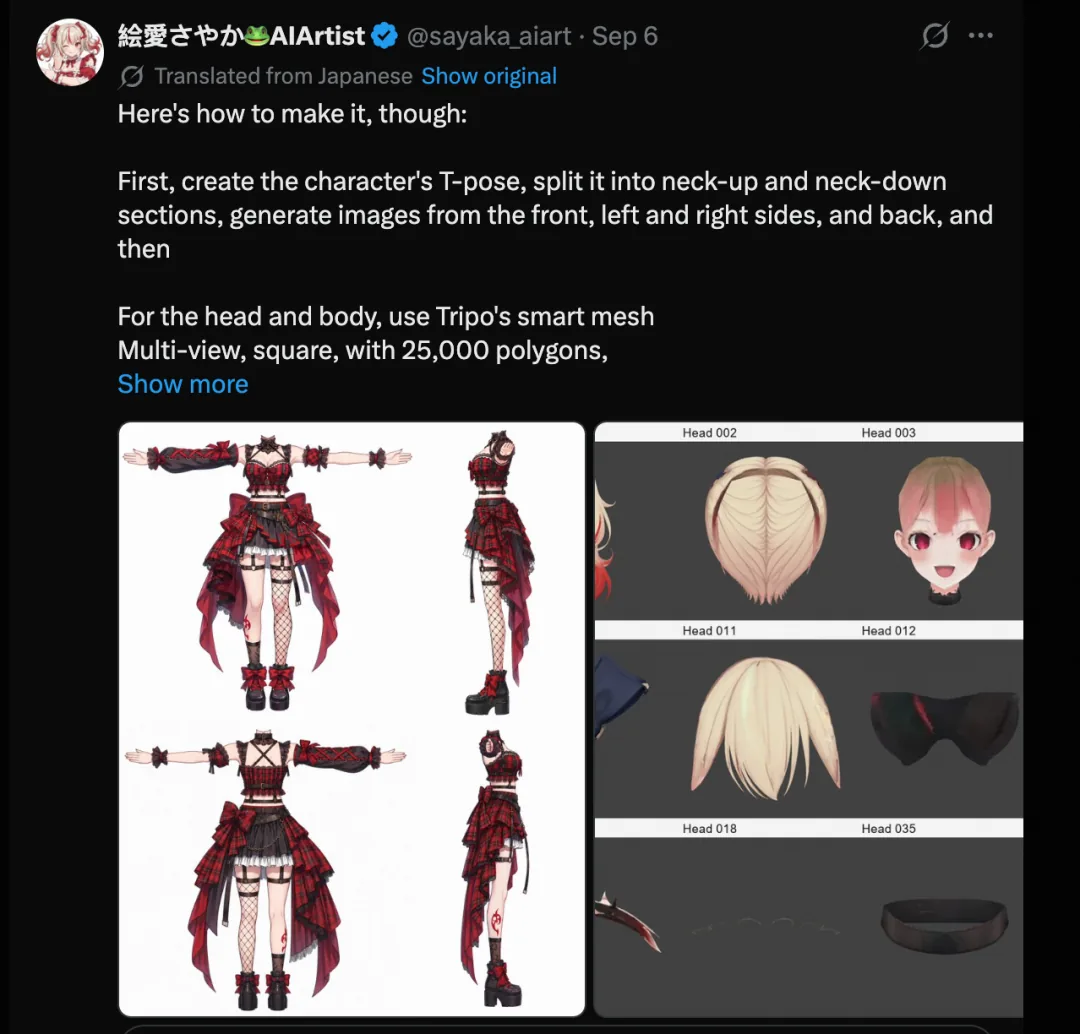
The “Tripo models it, Astra winds it up” pattern has also given many anime fans their first taste of waking a character up with their own hands. @sayaka_aiart produced a fluid anime dance that drew more than 200,000 views on X, and creator Nano (@Dstudio_ai) used Astra to give a Tripo-generated anime character animated facial expressions, earning 1,300+ likes on X.
3D is shifting from a specialist skill into a common form of expression, and Astra’s arrival is a brand-new beginning. Along the way, Astra and Tripo overlap in capability and open up ever more room to collaborate: Astra can complete some 3D tasks through code and production software, and it can call Tripo to push more complex 3D creation forward.
As more people finish 3D work through natural language, code and creative tools, the boundary of 3D creation extends to more everyday users and new scenarios — exactly the world we have been hoping for: to democratize optimal interactive experience with intelligence.
“3D foundation models will not be wholesale replaced by large language models — they will enter more creative workflows and tasks.”
03 / OVERVIEW
One person can now build a world alone
The moment Astra launched, developers and creators started asking us the hard question: is 3D generation about to be replaced? A flood of real-world practice — and the rapid growth in Tripo API calls — answered for us: 3D foundation models will not be wholesale replaced by large language models. They will enter more creative workflows and tasks.
The same shift is happening inside VAST. Since last weekend, more and more colleagues have been vibe-coding with abandon in a Feishu group. The “Coding for Love” group quickly grew past a hundred members and has produced plenty of fun cases:
Every one of them started as an idea we simply would not have acted on before. Astra has dramatically lowered the barrier: it can already weigh in on architectural and interior layouts and mechanical concept design, construct geometry and adjust dimensions and part relationships through code, and operate software to bring multiple models and tools into one project. As these abilities improve, the work an ordinary creator can finish alone will grow more complex too.
That may be Astra’s greatest value for 3D creation: a 3D world made for a friend, a game starring your own cat, an object designed for no one but yourself — any of them can become a project worth starting, at any moment.
04 / OVERVIEW
Every generation is the start of the next creation
At the same time, people want the character to look more like the one they drew and the room to sit closer to what they imagined — and they keep revising after the first version. That kind of creation demands faithful reproduction of a specific design, and it demands that changes be easy and fast.
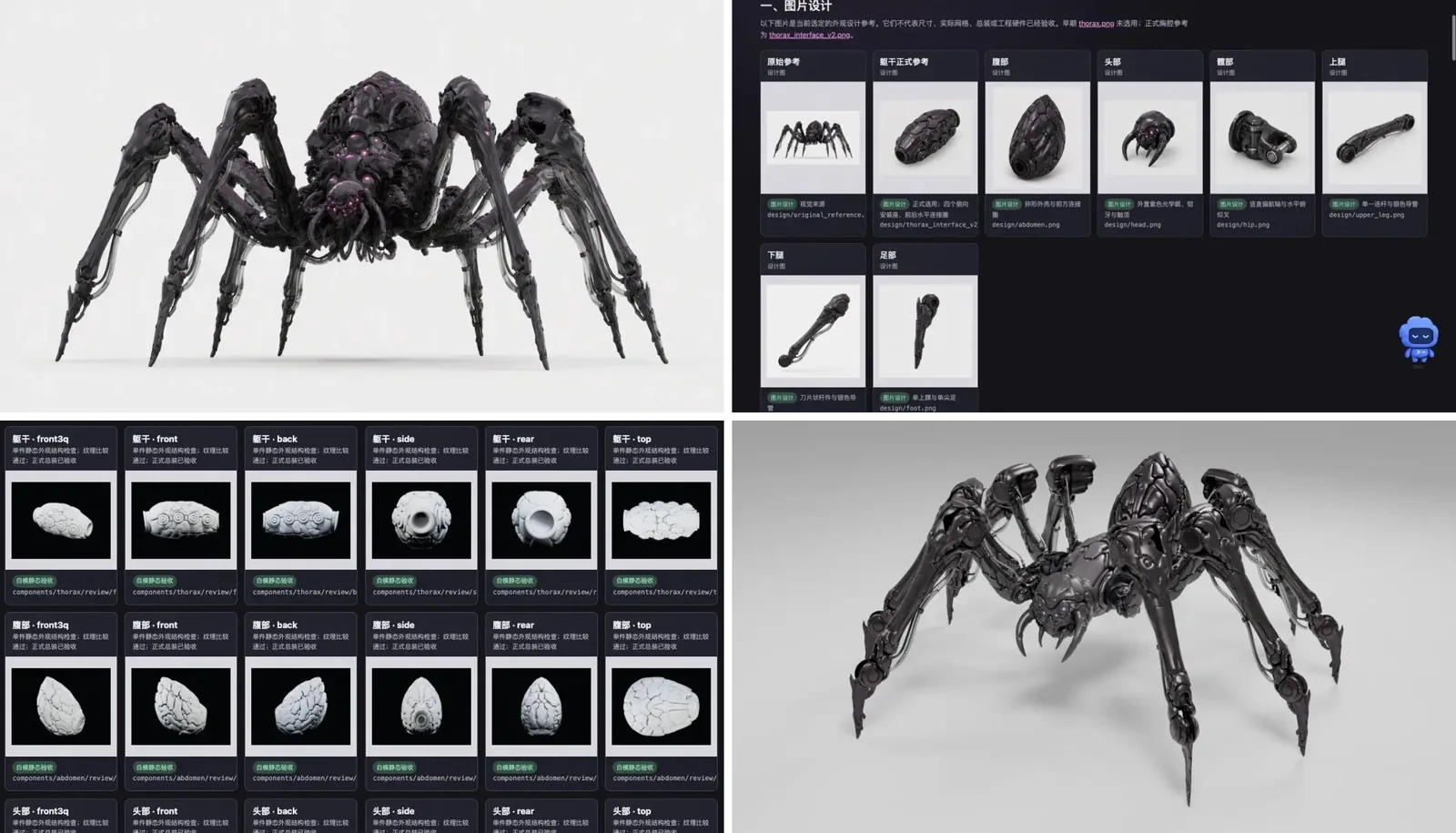
VAST chief scientist Yanpei Cao is part of the “Coding for Love” group too. As one of the first users and creators on Tripo P2.0, he generated a mechanical spider with P2.0 plus Opus 5, then — building on the model’s natural semantic part segmentation — had the LLM name each part and write and debug its motion logic, achieving part-level animation control over the whole spider.
Projects like these ask more of generated 3D assets than Astra, Opus and their peers can deliver: in fidelity for characters and organic assets, in mesh quality and in generation efficiency, they remain clearly short of production use. The mechanical spider, for instance, depends on the part structure Tripo P2.0 provides — giving motion control concrete objects to operate on — and on meshes organized at generation time, sparing rework once the asset is integrated into the piece.
Fidelity is also a matter of personal expression. To bring your own cat into a game, its face, markings and posture have to survive; to make it walk, you need topology fit for rigging and animation. Only when a specific design is reproduced faithfully and made usable do more people’s ideas become finished work.
The generative reconstruction behind the Tripo model family is solving exactly these problems. The Tripo H series keeps raising fidelity on complex forms and fine detail; the P series optimizes mesh organization within a polygon budget, and P2.0 adds native quad topology, polycount control and multi-view input, delivering structure that is ready for downstream production. All of these capabilities serve one goal: assets you can edit, rig and drop into real-time environments directly.
This is why we pursue production-ready generation. Every form and structure problem solved at generation time is time creators do not spend fixing, redoing and adapting — time they can put into motion, story and gameplay. Enabling more people to finish work on their own requires exactly this kind of 3D generation.
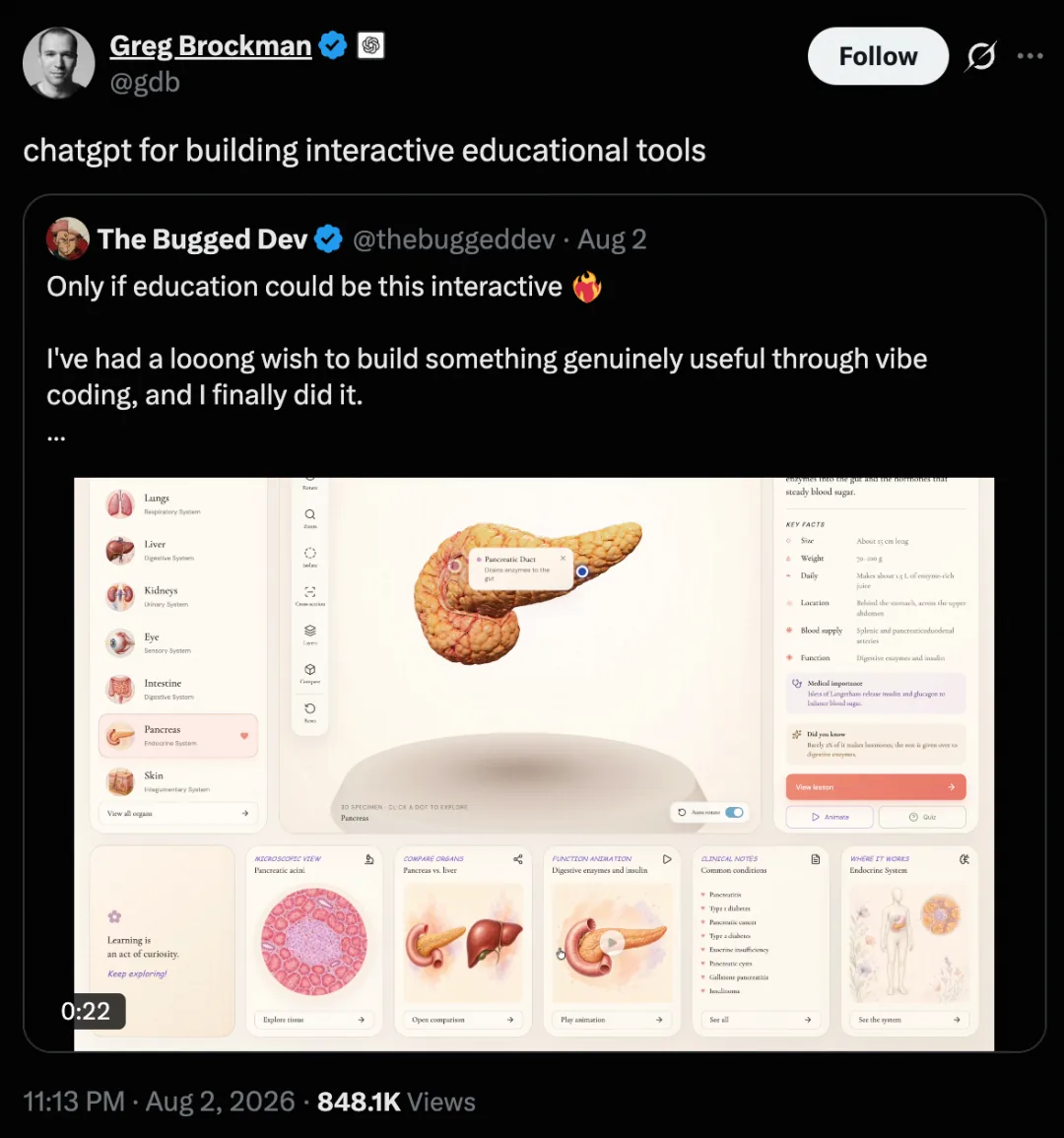
In fact, LLM + Tripo collaboration was already happening before Astra launched. Built on Tripo and GPT, @thebuggeddev’s interactive educational site on human organs was reshared by OpenAI co-founder and president Greg Brockman.
An indie team used Tripo to ship its first mobile game, Odyssey Loop (《奥德回环》); within two weeks of release it climbed TapTap’s best-seller chart and sold more than 8,000 copies. In the developer’s own words: have a great day, and may the boss strike it rich!

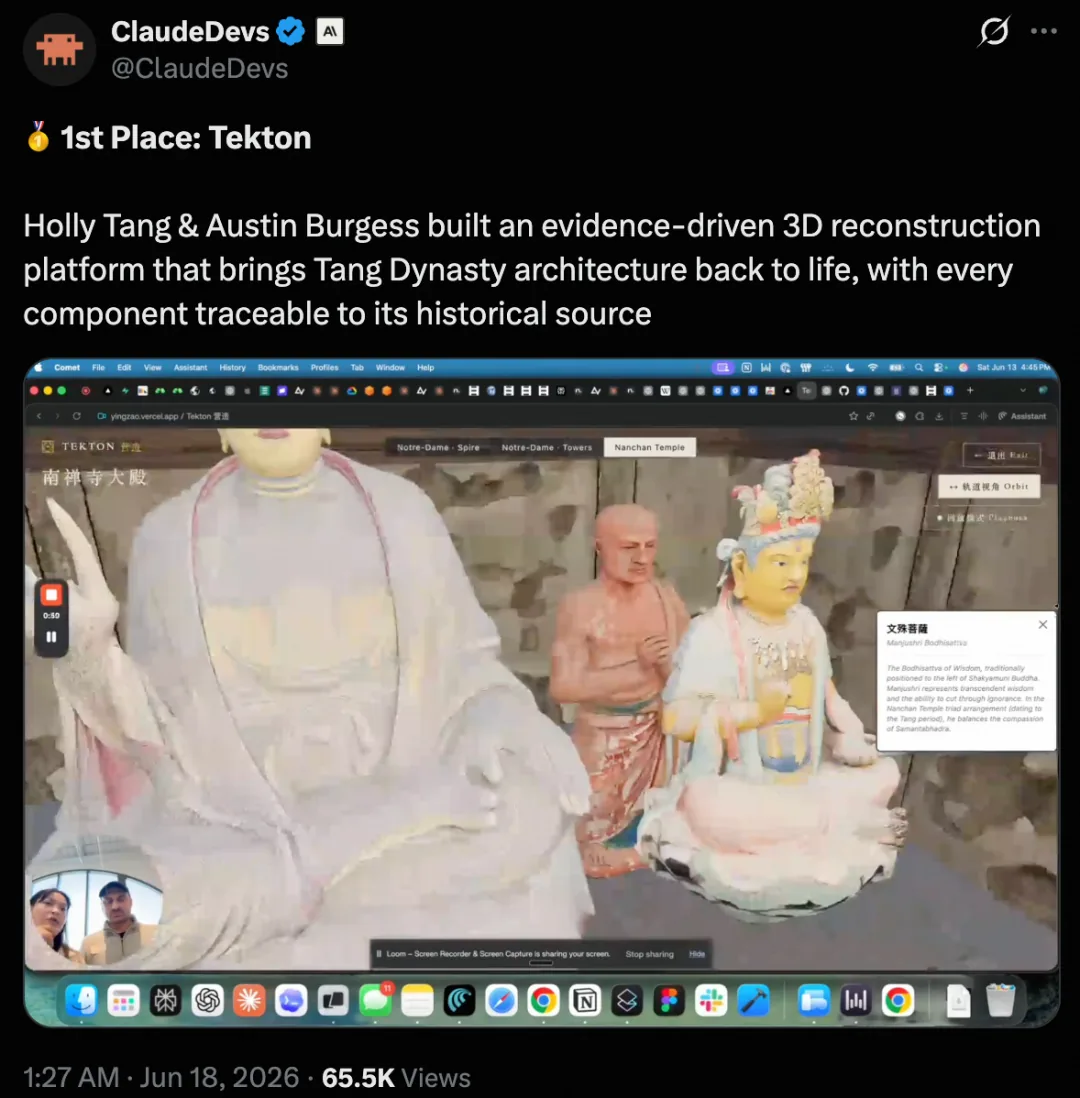
At the Claude Opus 4.8 Build Day hackathon this June, Tekton — Holly Tang and Austin Burgess’s historical-architecture reconstruction project — took first place, with its finely detailed Buddha statues modeled in Tripo. The Virtual Silk Road initiative launched by the School of Design at Shanghai Jiao Tong University, a digital heritage platform that has rebuilt more than thirty historical cities along the Silk Road, likewise uses Tripo as its core 3D generation engine.
05 / OVERVIEW
Doubling down on native 3D intelligence
We want every generation to be the starting point of the next creation. Once a first version exists, creators get specific: swap the character’s coat, keep the face and body proportions, and preserve the animation that is already done. A generative model has to understand what to change, what must stay untouched, and what a change will affect.
Large language models can learn these abilities too, and can push the work forward through code, tools and feedback. VAST chooses to keep investing in native 3D intelligence because dedicated three-dimensional training gets recurring construction and modification done with fewer attempts and at lower cost.
Character form, topology and part relationships follow a wealth of patterns that can be learned and reused. A model that learns them directly from 3D assets and from before-and-after pairs of edits moves part of the trial and error from production into training, cutting the deliberation and repair in every session. For the same production requirements, a 3D-native foundation model delivers better fidelity, more accurate edits and shorter turnaround.
The more complex the projects Astra can drive, the more fully Tripo’s capabilities get used; the sounder Tripo’s structures and the more stable its edits, the less repair and trial and error a project needs. The two will keep amplifying each other’s progress. Our research roadmap is moving from shape generation on to structural understanding, continuous editing, and motion, function and interaction — so that the 3D knowledge our models learn can support people and AI creating around the same character, space or idea, indefinitely.
06 / OVERVIEW
Join us on a 3D creation journey
If you are itching to try by now, step onto the stage we have built for you. Tripo’s first official hackathon is under way: the 2026 Tripothon S1 global 3D creation contest has officially kicked off in seven cities across seven countries, under the theme “A gift for ___?” — your world is the next gift. Registration is open. From the global online opening on September 13 to the finale on October 25, San Francisco, Tokyo, Seoul, Shanghai, Paris, Barcelona and São Paulo run in parallel.
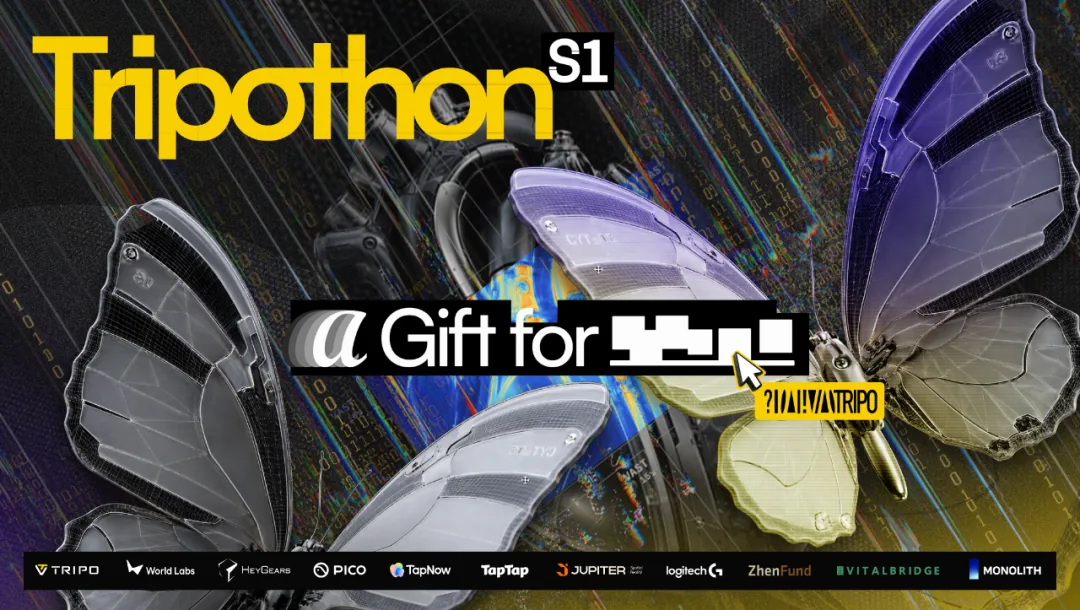
There are five tracks — Game, Film/VFX, VR/XR/AR, App and Physical Design — so whether your strength is games, film, spatial or physical design, you have a home ground. Beyond a shared online prize pool of US$80,000, every regional venue also has a “Best Gift” award up for grabs. We have lined up World Labs’ latest world model, HeyGears 3D printers, TapNow’s video creation toolkit and PICO XR headsets — everything from generation, printing and video to XR — and finished games can be published on TapTap right away. Partners including Jupiter SR and Logitech are adding prizes and cash awards, and the event is backed by ZhenFund, Oasis Capital and Monolith.
Naturally, you will have plenty of Tripo credits to power your 3D asset generation. Tripo is now officially live on the ChatGPT and Codex plugin marketplaces — which means the ultimate duo, Tripo and Astra, is yours to call on freely.

Today Tripo can be reached through the API, the CLI and the Codex plugin, covering everything from programmatic calls to AI coding. In professional production, Tripo’s DCC Bridge connects the mainstream 3D tools and engines — Blender, Maya, 3ds Max and ZBrush on the DCC side, and Unity, Unreal Engine, Cocos, Godot and Roblox Studio among real-time platforms.
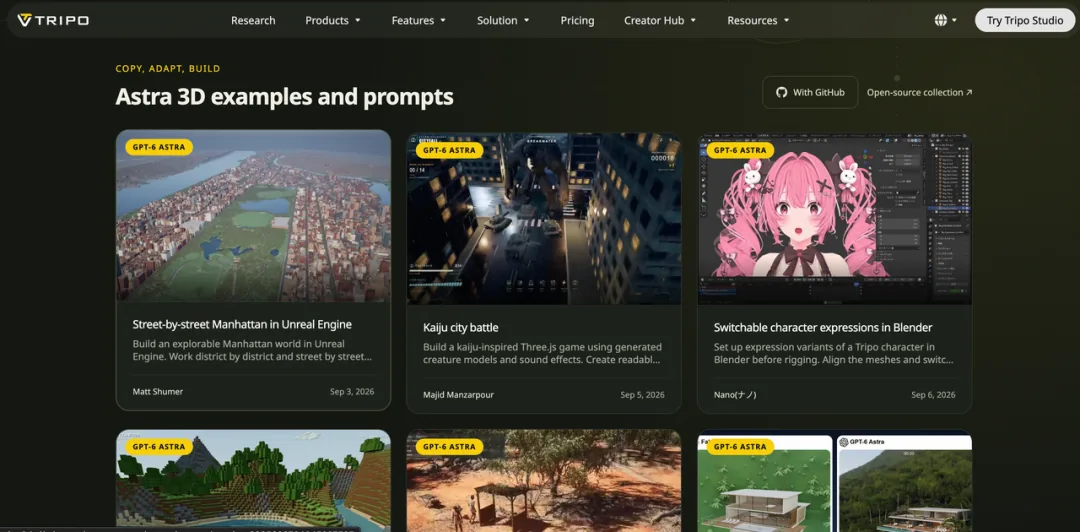
Beyond a well-rounded developer ecosystem, Tripo has also curated a rich library of prompt templates for creators (tripo3d.ai/3d-prompts). For GPT-6 Astra alone there are more than 200 3D creation prompts, spanning Blender scenes, Three.js websites, browser games and explorable 3D worlds. Creators can start from a working example, adapt its subject, constraints and interaction logic, and quickly shape a project of their own.
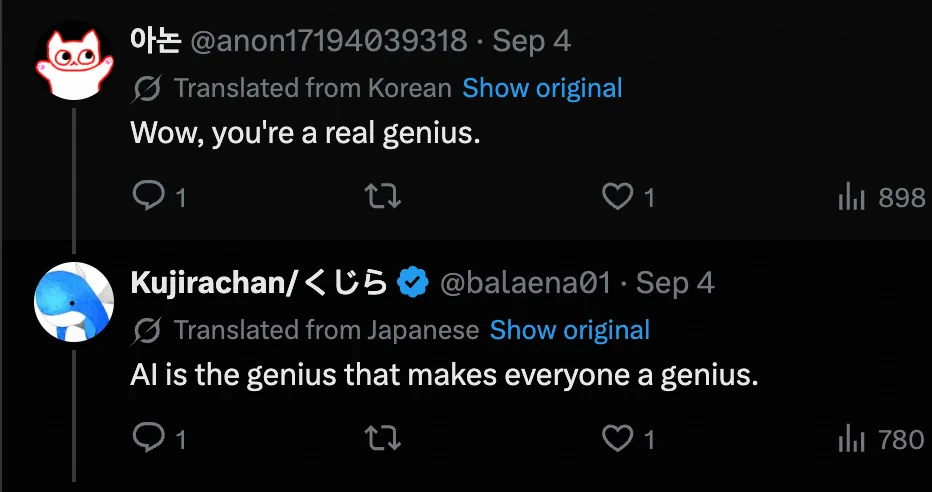
The most advanced models and creative tools are in place. What we are really waiting to see is how far everyone’s imagination can go once creation is freed from the shackles of specialist skill. On X, self-described modeling novice @balaena01 finished an original character animation in a dozen or so hours with Tripo and Claude Opus 5. In the replies, someone called them a genius. Their answer: “AI is the genius that makes everyone a genius.”
So, genius — now it’s your turn.
Note: all cases in this article come from the public internet or internal tests; if any infringe your rights, please contact us and we will remove them.