

 Download app
Description
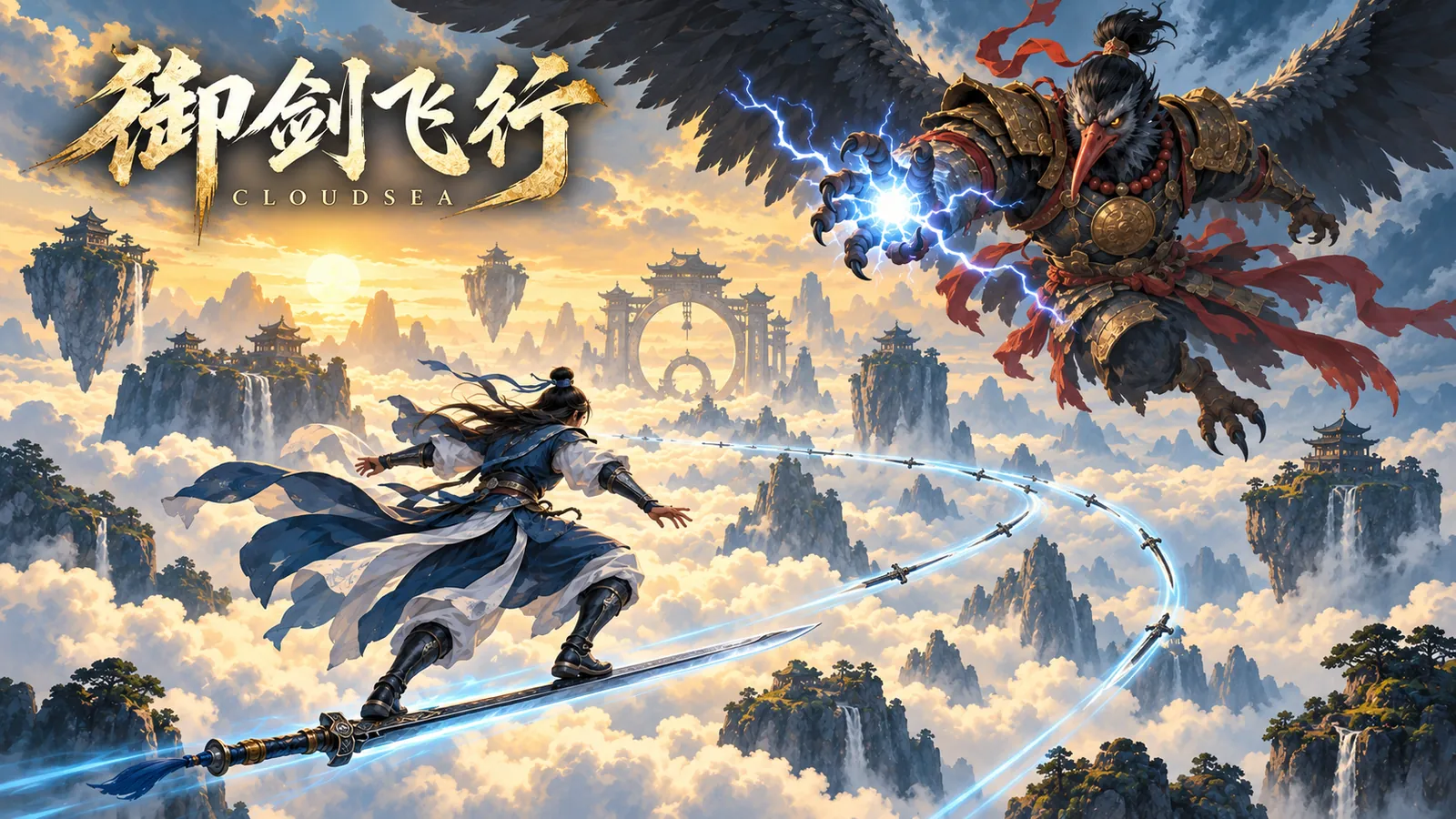
Sword Flight is a world of sword-riding you can step into in VR. Peaks rise out of a sea of clouds, an ancient mountain gate hangs in the sky, and tiangou, the celestial hounds of Chinese myth, circle between them. Standing on a flying sword, you break through the clouds and feel the vastness of Chinese xianxia through flight and combat.
It runs on PICO Neo 3: turn your head to scan the clouds and spot enemies, and use the controllers to steer your flight, lock on to targets and launch homing swords. The headset's stereoscopic space and freedom to look around, together with controllers that tie your movements to combat feedback, make the scale of the clouds, the thrill of riding a sword and the aerial battles the heart of the experience.
It is a gift for Chinese xianxia fans and anyone who ever dreamed of flying on a sword, especially those who grew up on xianxia stories and wondered what it would feel like to ride a blade into the sky. Something once imagined through a screen becomes an adventure you can live yourself.
It was developed in Unity, where the enemy AI and combat system were built, connected to the headset and controllers through the PICO SDK, and tuned for the standalone headset with rendering settings, anti-aliasing and performance optimization.
How Tripo was used
Tripo is where this world's visuals come from: every visible 3D asset in the piece was generated with Tripo, including the flying-sword effects, the hero's body and the scenery.
- From static assets to real-time play: Tripo-generated 3D characters enter the cloud-sea flight scene and take part in chases, attacks, target locking and homing-sword tracking.
- The workflow: starting from Tripo models, rigging, flight and spell-casting animations and motion fixes were done in Blender; the models then went into Unity for enemy AI, palm-launched effects and combat interactions, before the build was adapted to the PICO standalone headset, optimized and packaged.