

 Download
Description
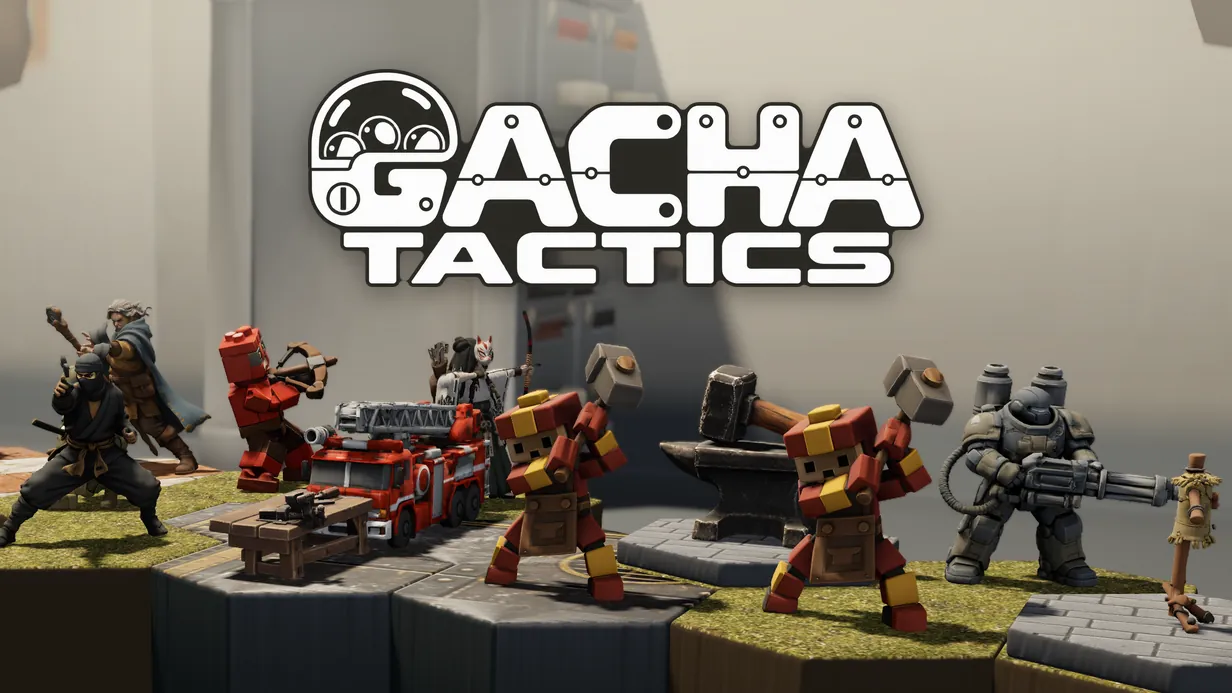
Gacha Tactics is a gift for anyone who cherishes their childhood memories, and for anyone who still keeps toys on their desk. It brings the excitement of childhood toys, favorite heroes and imaginary adventures into a miniature tabletop world.
The game grew out of the author's own childhood dreams, inspired by the transforming robots, building blocks and hero-team action figures of those years. They wanted to capture the joy of collecting toys, creating your own worlds and imagining adventures without limits, and to give players a place to revisit their own treasured memories.
Its gameplay draws on autobattlers: collect miniatures, arrange your team and terrain, and watch your lineup spring into action. Discovering synergies, combining units and experimenting with setups turn a nostalgic collection into a strategic playground. In detail:
- Capsule-machine shop: odds and rerolls decide which units you pull
- Merges: combining units lets you pick relics
- The board: a tabletop diorama stage with terrain tiles that have height and ramparts
- Transform and combine: vehicles turn into robots, and five robots fuse into one that fires a chest laser
- Also: async online matches, a tutorial and 10 languages
The game is developed solo in Godot, with Tripo making the 3D models for this little world. Before the event, the author had a solo Godot prototype called Miniature Tactics: a hex autobattler with a deterministic combat engine, early unit, skill and relic data, synergy rules and 90+ 3D models, which the demo reuses. During the event it was rebuilt as Gacha Tactics; the capsule shop, terrain, transforming and fusion, online matches and the rest listed above, along with about 150 new Tripo models, were all made in that window.
How Tripo was used
Tripo is the whole 3D art pipeline: every figure, prop and terrain tile on the board is a Tripo model.
- Per asset: Tripo image generation draws the concept (image-to-image keeps new figures in the roster's style and can re-pose a robot without changing its design), P2 image-to-3D builds the model, smart retopology turns it into quads, smart segmentation splits the parts that must move (weapons, fusion parts, capsules), and the result is exported as GLB.
- Batch tooling: CLI scripts log every task ID and bake the models, and Godot finishes them as painted miniatures.
- Volume: the pre-event prototype already had 67 Tripo unit figures, and about 150 new Tripo models were made during the event.