


 Download
Description
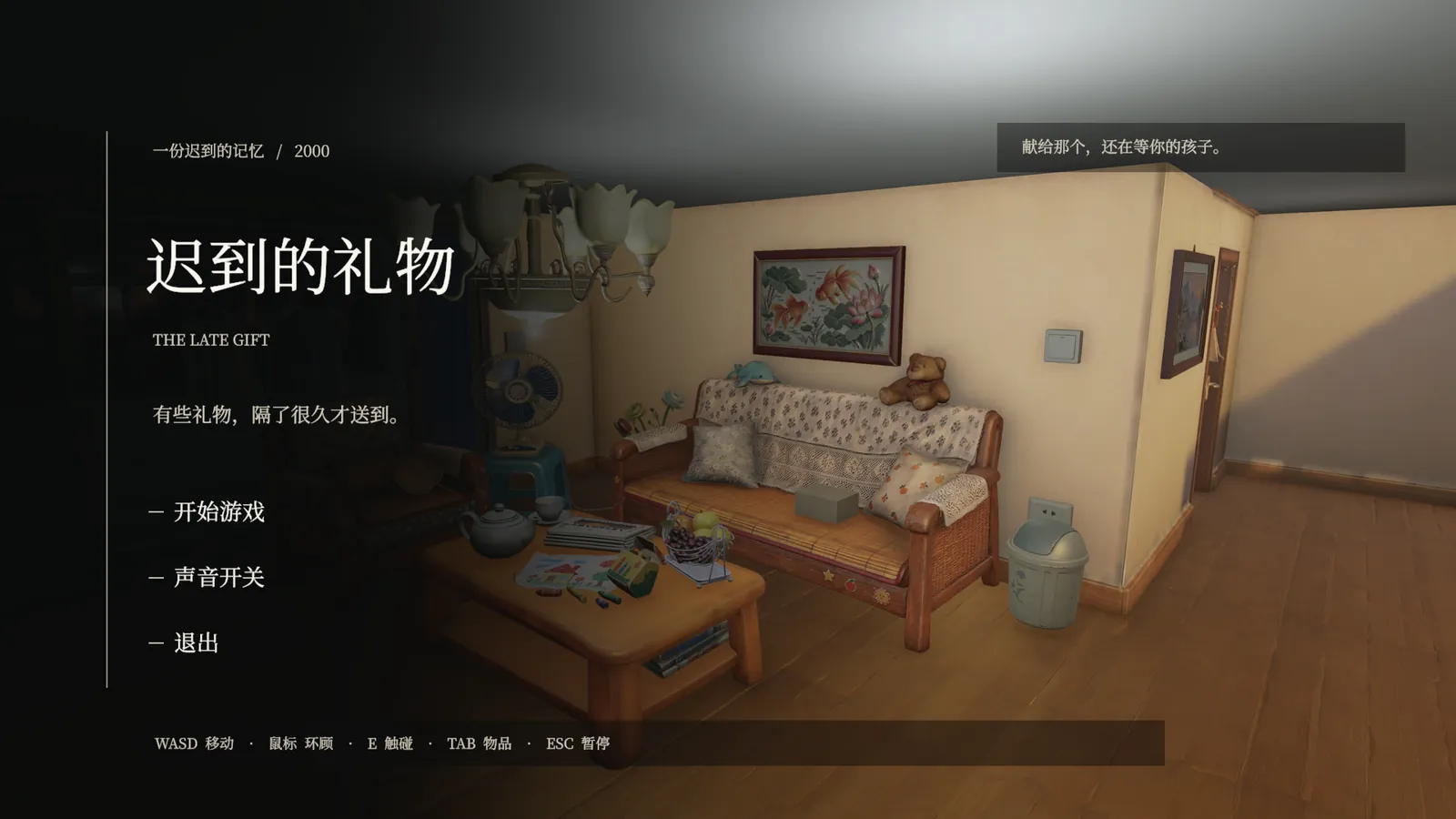
The Late Gift is a first-person narrative exploration game, and the author's gift to their younger self: the child who longed to be remembered and kept company, and who waited for birthdays alone.
You return to an old home that feels familiar but has lost its color. An old photo leads you into three unfinished childhood memories. Find the little fish and put it back in its tank, so that a life once cherished is remembered again. Put batteries in the night light and set the plush toy back by the pillow, answering the child who was afraid to fall asleep alone. Finally, set out the party hat, candles and present, light the candles yourself, and spend with her the birthday she once waited through alone.
You move the story forward by observing, picking up and returning objects. As the three memories are completed, color returns to the rooms and the old home grows warm again. Everyday objects, paper-like memory cards and sound weave this quiet reunion together.
The author wanted to turn the unanswered hopes of childhood into small things players can do with their own hands. When the last present is opened, the back of the photo reads: "To the little me. Thank you for waiting for me." The gift is a promise from someone who has finally come back: "This time, I'll spend it with you."
The game was made in Unity, with the furniture, everyday props and characters mainly generated with Tripo.
How Tripo was used
Tripo is the modeling step in the team's AI art workflow: most of the 3D models and textures, including the furniture, everyday props and characters, were generated or converted with Tripo.
- The workflow: the team talked through requirements with Codex to draft the design document and an item list, generated an image of each item from the list with GPT Image, then used Tripo to generate 3D models and retopologize them, imported them into Unity, and finally had Codex check whether each model met the quality bar.
- Into the game: in Unity, the models were assembled into scenes, with materials adjusted and interactions set up.