

Description
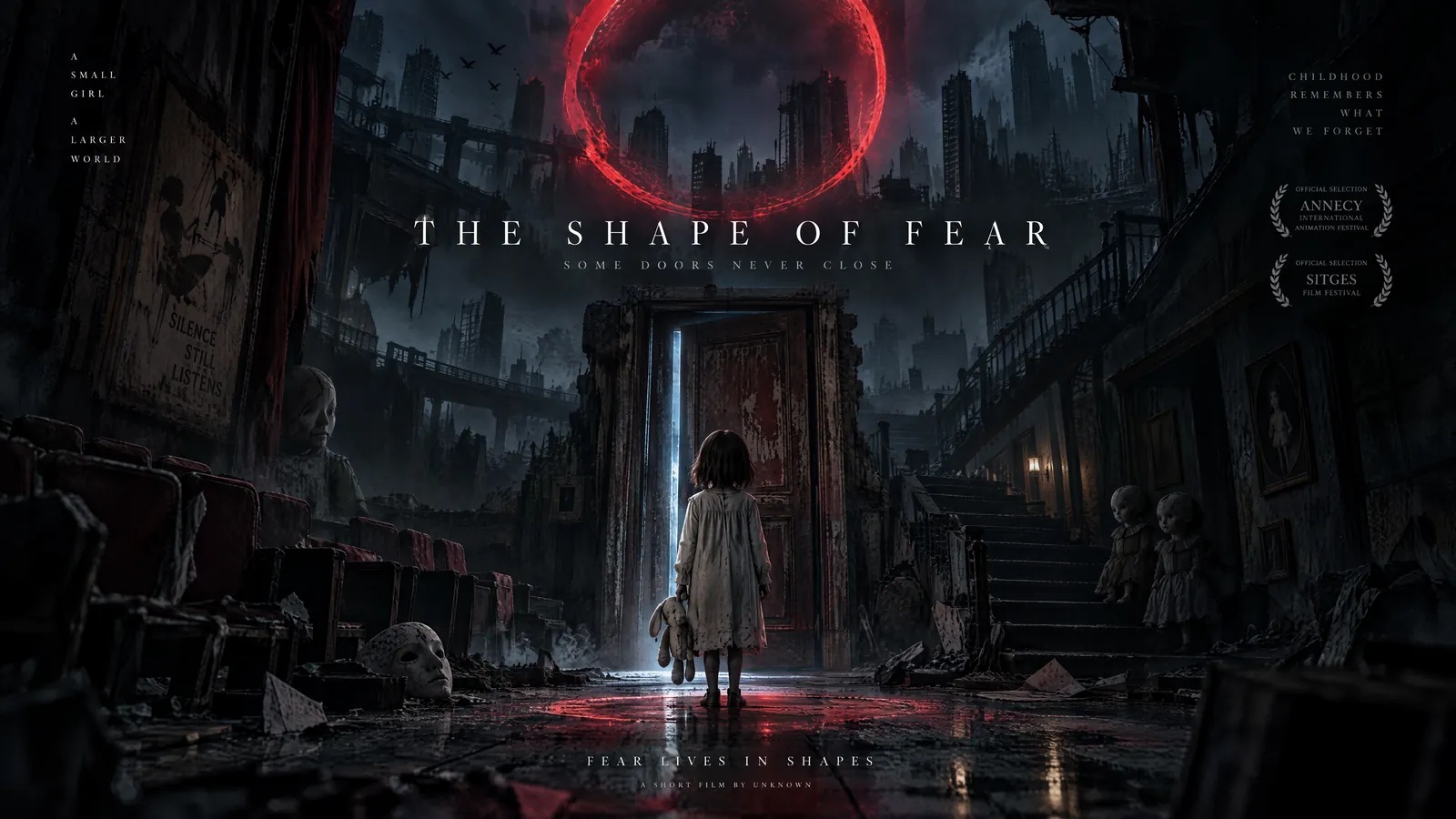
The Shape of Fear grows out of the author's recurring childhood nightmares. Broken doors, silent dolls, masks, empty theaters, stairwells, ruined cities and a red circle appear not as literal memories but as symbols of fear, and each space stands for a different emotion: confinement, being watched, isolation, judgment and the inability to speak. The film turns these dream fragments into a visual journey of memory and reconciliation.
It is a gift to the author's childhood self. It does not erase fear; it reshapes it into something visible, understandable and gentle. Rather than using horror to shock, the film treats fear as memory, atmosphere and emotional structure, and the nightmare becomes a visual letter to the child who once lived through it.
It was made with a hybrid workflow of UE5, Tripo and AIGC. The author first pulled out the key symbols of the nightmares and mapped each one to an emotion. UE5 handled real-time scene building, cinematic lighting, camera blocking, material control and spatial continuity, while Tripo sped up asset creation. After each scene was composed, selected frames were refined with AIGC and turned into short shots through image-to-video generation; the original images were created with OpenAI's GPT image generation tool.
The main technical goal was stability: consistent lighting, clean shadows, fixed object relationships, stable characters and restrained camera movement. Every shot follows clear motion rules: one camera move, one main action, one change in the environment. The final edit links the shots into a short cinematic sequence that moves from fear to memory, and finally to an emotional return.
How Tripo was used
Tripo was a core part of the workflow: working with UE5 and other AI tools, it carried the film from concept to final video and left the author more room for atmosphere and storytelling.
- 3D assets: masks, dolls, props, broken furniture and architectural fragments were generated with Tripo, quickly turning concepts into usable 3D models that were then optimized and placed in UE5.
- Quad remeshing: kept file sizes down while leaving the models editable.
- Auto-rigging and AI motion generation: made fast character animation possible.