

 Download source
Description
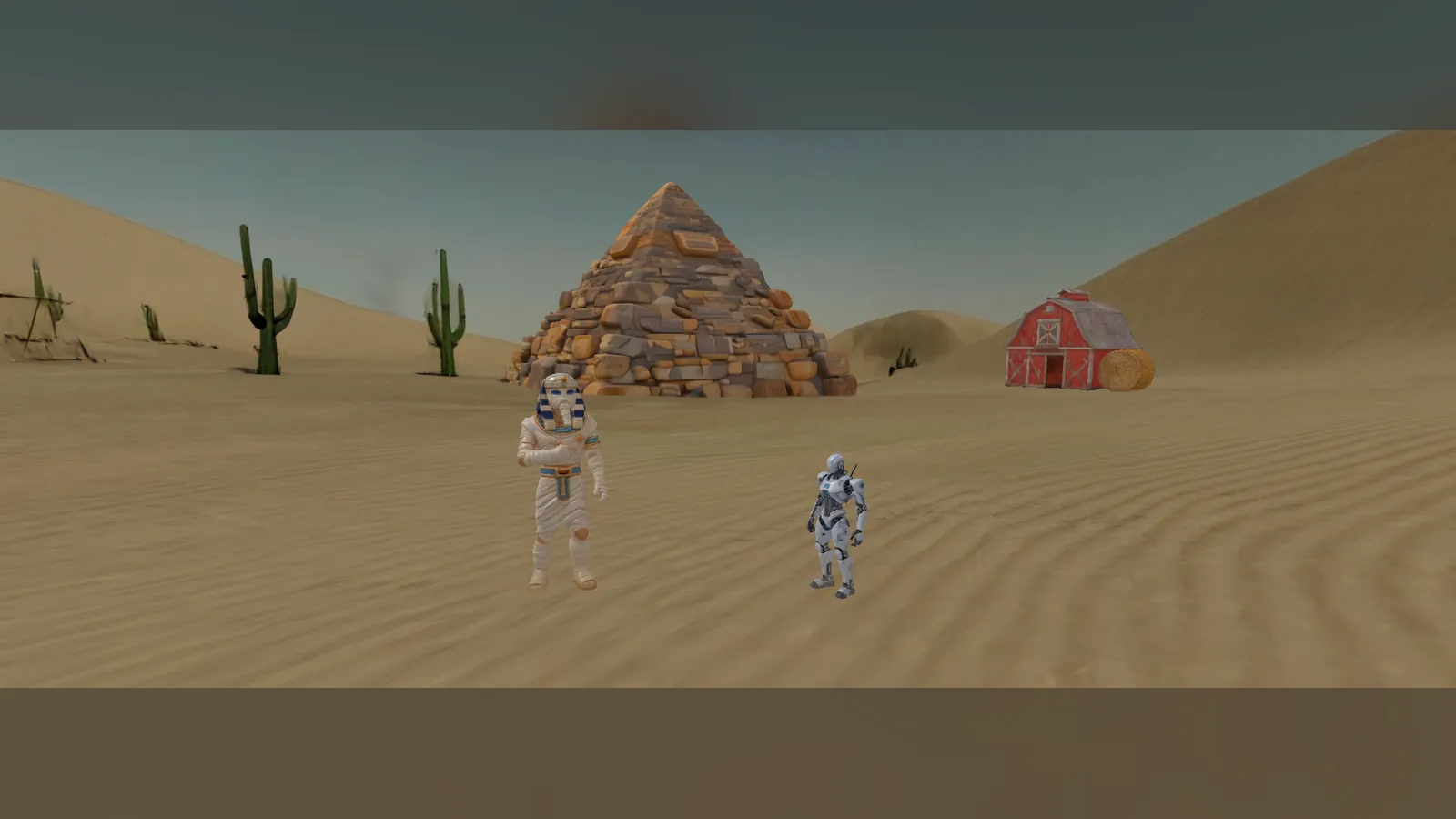
Wordsmith is a generative 3D experience that turns a single idea into a world you can step into. It is a gift for dreamers: people who can imagine incredible places and stories but don't have the time or technical skills to build them in 3D. The goal is not simply to generate a 3D asset, but to turn imagination into a place.
It starts with something as simple as a prompt. Instead of asking you to model objects, design environments or learn a 3D engine, Wordsmith runs the creation pipeline behind the scenes: World Labs generates the world itself, Tripo creates the entities that inhabit it, and the two come together as one coherent space. Write "An ancient guardian protects a glowing crystal deep inside a forgotten magical forest," and moments later, instead of a text description or a pile of disconnected assets, you can explore the forest and meet its guardian.
Everything you generate, from worlds and scenes to characters and assets, can be reused across creations without losing detail or functionality, so you can expand or remix a project freely; you can also import worlds and assets made outside the app into your scenes. Scenes render in the browser, and objects can be moved, rotated and scaled with live gizmos. With the Jupiter Interlace SDK, the fullscreen view can switch to glasses-free stereoscopic 3D, including on Jupiter SR, and back to sharp 2D when it is off.
The authors want generative AI to feel less like a content generator and more like a world-making companion. Every generated world is a small gift: a place that once existed only in someone's imagination, now tangible enough to explore, share and experience.
Wordsmith is provided as source code and needs to be built and run yourself; the front end uses React and Three.js, and the back end runs on Node.js.
How Tripo was used
Tripo is Wordsmith's procedural 3D prop generator, creating the characters and objects that inhabit each world.
- On demand: an LLM (GPT-4o-mini, Claude 3.5 Sonnet, Gemini 1.5 Flash) breaks the prompt down into a structured WorldSpec, which triggers concurrent Tripo API jobs that return GLB models.
- Into the scene: the backend normalizes bounding boxes and pivots and applies Draco/KTX2 compression before composing the models into Three.js; they are anchored to the World Labs terrain and can be moved, rotated and scaled with live gizmos.
- The role: on-demand, semantic 3D mesh generation replaces a manual DCC asset pipeline.